
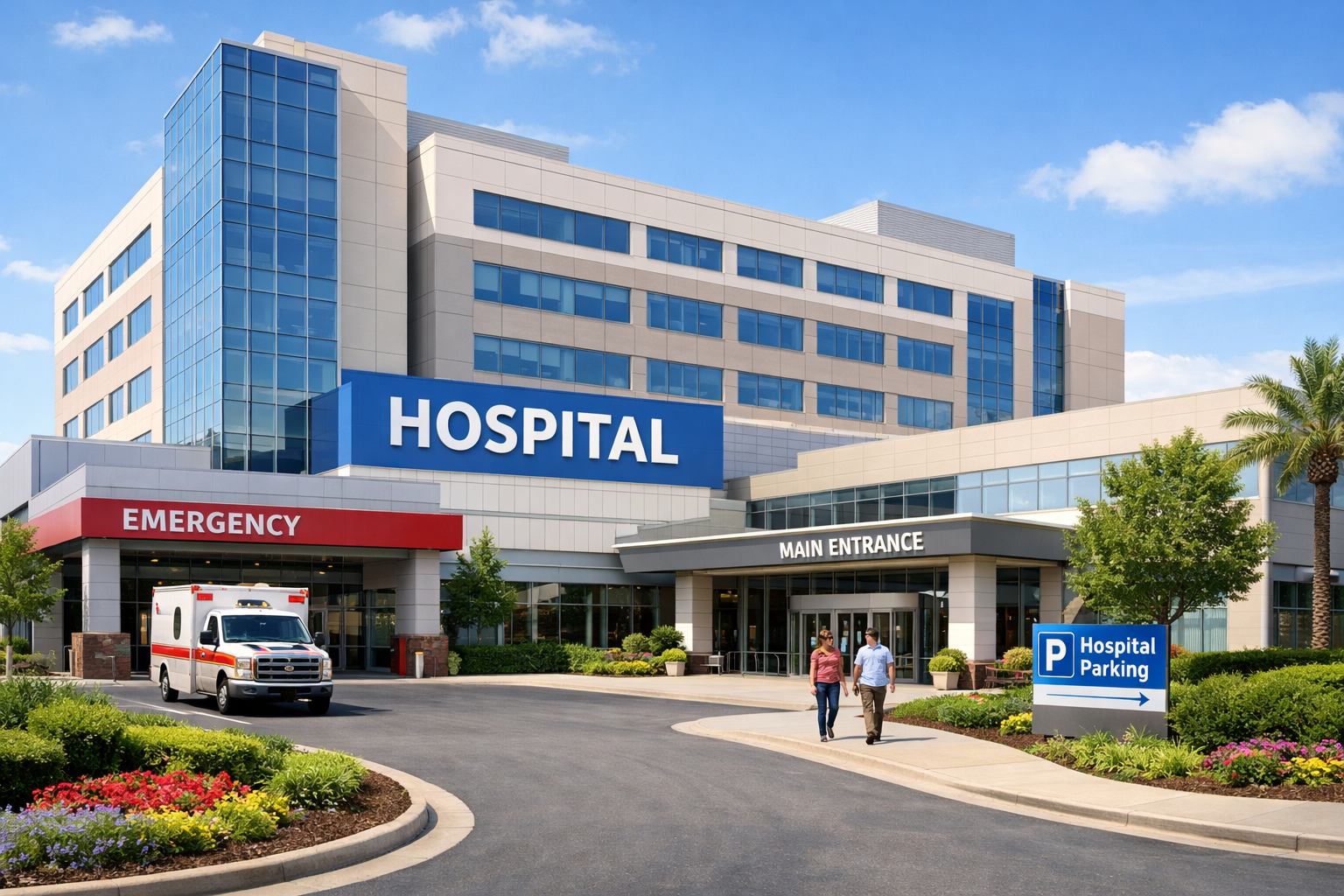
Healthcare environments place the highest demands on building components. Access doors must withstand rigorous cleaning, meet building requirements and give facilities teams quick, safe access to critical systems — all while minimizing disruption to patient care. Thoughtful selection is the difference between smooth daily operations and ongoing maintenance headaches.
Below are the key performance areas healthcare teams care about most, with Nystrom product recommendations you can use as a starter spec or basis for substitution requests.
Infection Control & Cleanability
What matters in clinical spaces
- Nonporous, smooth surfaces that tolerate hospital‑grade disinfectants without pitting, peeling or harboring residue
- Corrosion resistance in humid or chemical‑exposed zones (sterile processing, labs, pharmacy, imaging suites)
- Gasketed closures (where appropriate) to help to provide a tight fit/seal
Recommended Nystrom solutions
Stainless Steel Access Doors (Type 304/316)
Use in procedure rooms, labs, sterile corridors, dietary services and any space exposed to moisture, disinfectants or chemicals. Brushed stainless provides a clean, professional finish and resists corrosion from repeated cleaning cycles. Pair with continuous (piano) hinges and flush hardware for fewer debris traps.
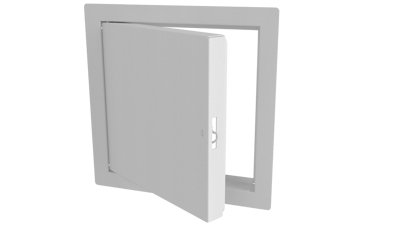
Gasketed Ceiling & Wall Access Doors
For areas needing enhanced particulate control (e.g., medication rooms, clean storage, imaging control rooms), specify gasketed panels that reduce air leakage. Select paint‑ready steel for general areas or stainless for high‑frequency cleaning.
Flush, Paint‑Ready Steel Access Doors (Healthcare‑grade finish)
In non‑sterile patient areas and administrative zones, paint‑ready panels with smooth faces and tight clearances deliver simple cleaning without visual clutter. Where vandal‑resistance is required (public lobbies), add tamper‑resistant hardware.
Specification tips
- Call out cleanability in the performance section (e.g., compatibility with quats/bleach), and require flush surfaces, continuous welding at corners and concealed hinges where feasible.
- Standardize core/keys for nursing and facilities teams to reduce cross‑traffic and time‑to‑access.
Life‑Safety Compliance
What matters for code and risk management
- Correct hourly fire ratings that are 75% the wall or ceiling assembly (common: 45‑, 60‑, 90‑, or 3‑hour)
- Self‑latching and, where required, smoke‑resistive gasketing to protect egress paths and smoke compartments
- Ceiling‑rated assemblies for shafts/plenums where fire separation is required
- Durable construction to maintain listing over years of use
Recommended Nystrom solutions
Fire‑Rated Wall Access Doors (up to 3‑hour)
Use in corridors, stair enclosures, equipment rooms adjacent to egress and any rated partition. Specify self‑latching hardware and intumescent/smoke seals where the design calls for smoke control. Opt for heavy‑gauge steel faces to stand up to carts and gurneys.
Fire‑Rated Ceiling Access Doors
For shaft inspections, dampers and plenum utilities. Choose models that are listed for the required rating, include reinforced panels to prevent deflection and feature secure latching to maintain assembly integrity.
Security‑Enhanced Fire‑Rated Doors
In sensitive zones (pharmacy, IT/telecom, imaging equipment rooms), combine the correct fire rating with tamper‑resistant hinges, cylinder locks or keyed cams to prevent unauthorized access.
Specification tips
- In Division 08/10 language, list rating, location (wall/ceiling), hardware set and required gasketing.
- Require submittals showing third‑party listing, assembly details and installation instructions to speed Authority Having Jurisdiction (AHJ) review.
Serviceability (Fast, Safe Access to Critical Systems)
What matters to facilities and clinical engineering
- Right‑sized openings aligned to maintenance tasks (valves, med‑gas zone valves, dampers, junctions, UPS/IT)
- Clear labeling and consistent keying to minimize time searching for the right panel
- Hinge and hardware selection that supports frequent cycling without sagging or rattling
- Ceiling grid compatibility for rapid ceiling access with minimal disruption
Recommended Nystrom solutions
General Purpose & Heavy‑Duty Steel Access Doors
The everyday workhorses for MEP chases, equipment rooms and back‑of‑house corridors. Specify continuous hinges for high‑cycle use and reinforced frames in high‑traffic routes.
Med‑Gas / Valve‑Access Door Kits
For zone valve boxes and shutoffs, select appropriately sized panels with clear viewing or labeling options so staff can identify critical valves quickly during emergencies.
Recessed Doors for Finish Integration
In patient areas where appearance matters but frequent access is still needed (e.g., headwalls with service points), recessed, finish‑accepting doors (gypsum/tile‑ready) preserve the design while keeping maintenance practical.
Process tips
- Build a hospital door matrix: map key clinical/utility spaces to door type, rating, material and hardware.
- Standardize labeling conventions (e.g., “EFS‑VALVE‑3 WEST”) and maintain a digital log so on‑call staff can respond faster.
Fast Spec Guide (Drop‑in Language)
For clinical/clean areas:
“Provide stainless steel access doors with smooth, nonporous faces, continuous hinges and minimal external hardware. Where noted, provide perimeter gasketing. Doors shall withstand repeated cleaning with hospital‑grade disinfectants.”
For egress/rated partitions:
“Provide listed fire‑rated access doors matching the required hourly rating of the assembly (wall or ceiling). Include self‑latching hardware and smoke/intumescent seals where noted. Submit listing documentation and installation details.”
For high‑cycle service areas:
“Provide heavy‑duty steel access doors with continuous hinges, reinforced frames and tamper‑resistant hardware where indicated. Coordinate sizes with trade contractors to ensure clear access to valves, dampers, and junctions.”
The Bottom Line
In healthcare, access doors must do three things exceptionally well: clean easily, protect life safety and enable fast service. The Nystrom range — stainless and gasketed panels for clean areas, fire‑rated solutions for rated assemblies and heavy‑duty/lay‑in options for maintenance — gives design teams and facility managers one coordinated toolkit to keep patient environments safe, compliant and operational.